

"Pull Yourself Up by the Bootstraps” Was Always a Lie
Notes from an Ex–Foster Kid Who Actually Tried

First ~ an apology (and a reality check)
I’ve been quiet.
April came and went, and I didn’t publish.
Not because I ran out of ideas.
Not because I lacked discipline.
Because life has been life-ing.
2025 didn’t just challenge me ~ it escalated every single month.
January opened with spinal surgery to remove two large masses.
December closed with my mother’s death.
Between those?
Six additional surgeries. A body relearning how to exist.
A nervous system trying to stabilize itself in real time.
Then 2026 said: you thought we were done?
Days after returning from my mother’s end-of-life service, my employer denied my disability accommodations and terminated my position.
Unemployment in this state? 12 weeks. That ended in March.
That same month, I asked family for help. Two remaining biological relatives.
One responded with silence I expected.
The other responded with silence that broke something.
So no ~ didn’t get a newsletter. April got survival.
BTW, Happy Foster Care Awareness Month!
Now let’s talk about these fckn “bootstraps”
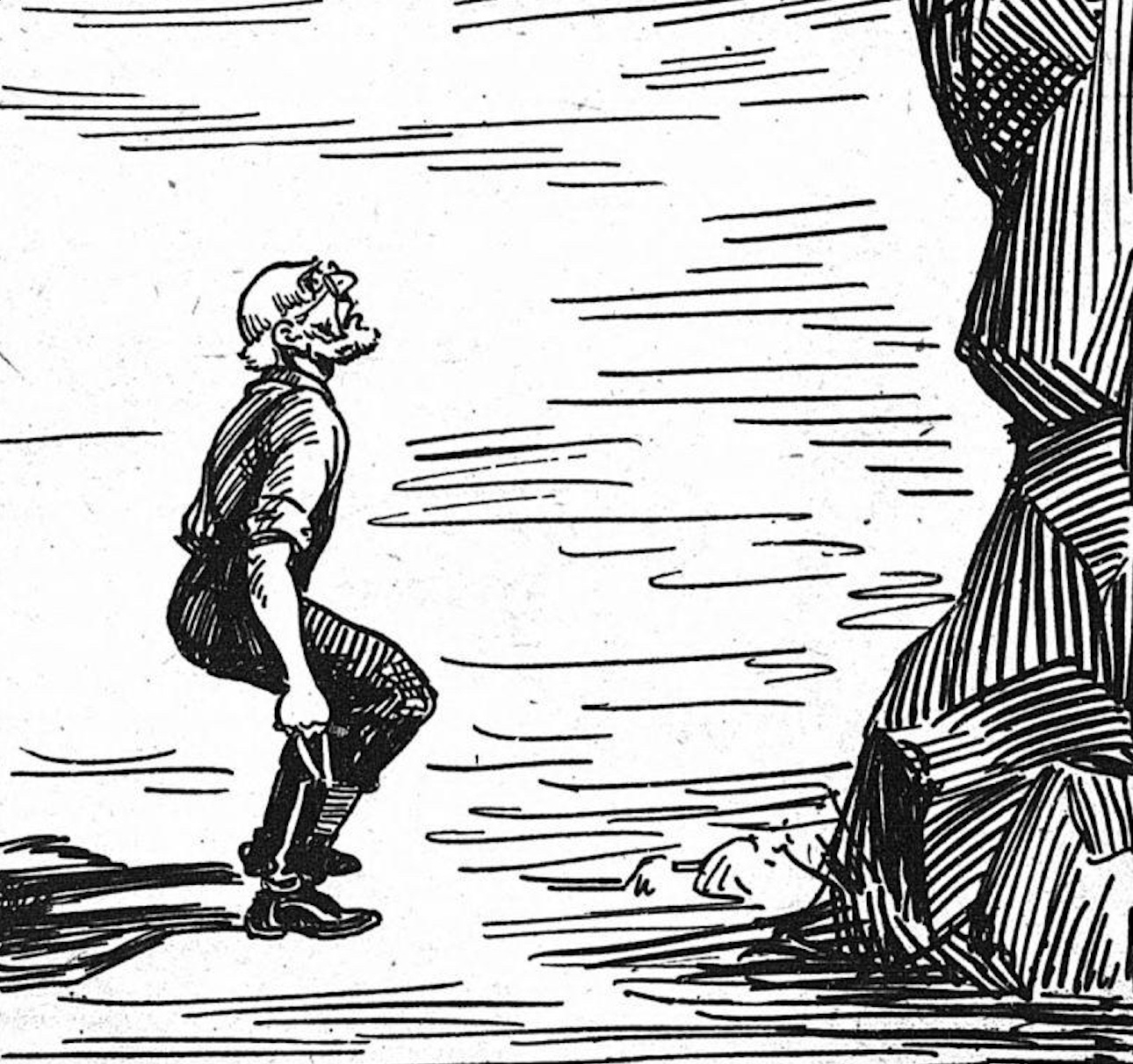
Because apparently, I’m supposed to pull myself up by them.
The phrase “pull yourself up by your bootstraps” originated in the 19th century as a metaphor for an impossible act—lifting yourself off the ground by your own boots (Oxford English Dictionary, n.d.; Safire, 2008).
That was the point.
It meant: This cannot be done.
And yet today, it’s used as policy logic.
What I was told to do ~ and what I actually did
I did everything right.
Worked 3 jobs while in school full-time
Earned a Master’s and a Doctorate
Won national and international awards
Presented research globally
Built interventions grounded in lived experience and science
Started job searching 2 years before graduating
This is what “bootstraps” is supposed to look like.
And yet ~ I am
Terminated after requesting disability accommodations
Living with Secondary Adrenal Insufficiency
Managing chronic pain from spinal surgery and nerve regrowth in my lower back
Navigating a new larger than average kidney stone in the same kidney that nearly killed me last year
Fainting at physically demanding jobs (again) I should never have needed to take
Watching science jobs disappear as funding contracts
Being told I’m “not a fit” for roles I am overqualified for
At one point, I was assumed to be mentally unstable ~ until they Googled me.
“Holy shit, she’s the real deal.”
And still: no.
On “Who You Know” (and why that advice has limits)
I’ve been told ~ repeatedly ~ that success is about “who you know.”
Fine.
So I did that too.
I introduced myself in rooms where I didn’t belong yet.
I went to conferences, societies, events, cold conversations ~ sometimes awkward, always intentional ~ because I understood the assignment: proximity creates opportunity.
But here’s the part people don’t say out loud:
’access to networks is not the same as acceptance within them.’
I’ve been called overqualified in one breath and treated like a fraud in the next.
I’ve had headhunters pursue me as a “top candidate,” only for clients to quietly pass after a single glance at my profile. I’ve had organizations verify my credentials ~ degrees, awards, publications ~ and still choose less qualified candidates without even a conversation.
So no, this isn’t a lack of effort, awareness, or strategy.
This is what happens when “who you know” runs headfirst into bias, discomfort, and systems that don’t know what to do with someone who doesn’t fit their expectations. Networking works ~ but not equally, and not for everyone.
For those who think this is just my story ~ read the data
Black women and unemployment (2026 reality check)
U.S. Bureau of Labor Statistics
https://www.bls.gov/web/empsit/cpsee_e16.htmEconomic Policy Institute
https://www.epi.org/indicators/state-unemployment-race-ethnicity/
The latest labor data continues to show:
Black workers ~ Black women ~ experience higher unemployment rates than white workers, even at similar education levels (BLS, 2026; EPI, 2026).
These disparities persist across economic cycles, reflecting structural inequity rather than individual behavior (Wilson, 2023).
Black women are more likely to be concentrated in lower-wage, less stable roles, increasing vulnerability when sectors contract (National Women’s Law Center [NWLC], 2024).
Science and public health jobs are shrinking
National Institutes of Health
Centers for Disease Control and Prevention
Association of Schools and Programs of Public Health
Funding constraints → fewer grants / research → fewer contracts → fewer jobs.
Public health didn’t become less necessary.
It became less funded.
Public health workforce instability
Kaiser Family Foundation
Health Affairs
After being labeled “essential,” the workforce has been:
underfunded
burned out
politically targeted
pushed out
About “just report it” ~ the EEOC reality
People say:
“File a complaint.”
“Take legal action.”
Let’s ground that.
U.S. Equal Employment Opportunity Commission
The EEOC receives tens of thousands of cases each year.
Many are:
closed without a finding
delayed for months to years
Independent reporting from NPR highlights:
case backlogs
limited resources
enforcement constraints
Filing is not wrong. But it is not simple, fast, or accessible for people already in crisis.
Also, this is a part of new reality: https://www.npr.org/2026/03/31/nx-s1-5763966/eeoc-trump-white-men-civil-rights-dei-discrimination
MAY is Foster Care Awareness Month:
The “Bootstraps” Myth Meets Foster Care Reality
Now layer this onto foster care.
Social Determinants of Health (SDoH) are the conditions shaping life outcomes
(World Health Organization, 2008)
Economic Stability
Former foster youth face high unemployment and poverty (Courtney et al., 2011). Bootstraps require income.
Education Access
Only ~3–4% earn bachelor’s degrees (National Foster Youth Institute, 2020).
Even when we succeed? We are still blocked.
Healthcare Access
Chronic conditions are common.
Continuity of care is rare ~ especially when on Medicaid that dosen’t cover everything, even when you are unemployed, with a potential life threatening illness.
Bootstraps don’t regulate cortisol.
Social Support
Family instability removes safety nets. Not everyone is born with a stable family foundation. Crisis hits harder.
Housing Stability
Up to 36% experience homelessness by age 26 (Courtney et al., 2011)
Try “pulling yourself up” when you are unemployed due to no fault of your own, no family to assist, no income to cover the cost of your medicine, and the local available resources only help you with issues of homelessness AFTER you’ve been DOCUMENTED as UNHOUSED for at least ONE YEAR. How can one PREVENT homelessness when you are in my position - and every available resource MAY only grant you entry into a program AFTER ONE YEAR of being homeless (so long as someone ELSE has it written down somewhere) ?
Let’s translate the modern version of the metaphor properly
You’re told: “Pull yourself up by your bootstraps.”
Reality:
No boots
No stable ground
Systems cutting the laces
Then: “You’re not trying hard enough.”
The Black Tax
Black workers must outperform to be considered equal (Bertrand & Mullainathan, 2004).
I did.
Still excluded.
This is not a motivation problem
This is:
labour economics
structural racism
ableism
policy failure
and institutional erosion (especially from the federal level)
What I actually need
Not motivation. Not metaphors.
I need:
accessible, low-physical-strain work
systems that recognize expertise
healthcare that adapts to real life
policies that fund the fields they told us to enter
Final thought
If bootstraps worked ~ I would be your success story.
Instead, I’m your evidence that the model is broken, or reality is being ignored for an entire population.
And yet ~ I’m still here
Not because the system works.
But because I refuse to disappear.
Thank you again for taking the time to read this lived experience update.
I sincerely hope it has helped you consider a different point of view or may relate to someone you know.
Feel free to forward it to someone who might benefit from these newsletters.
Please support me and this work by subscribing and/or helping me cover the cost of my medication below:
Ta for now,
Doc Sunshine
References (APA)
Bertrand, M., & Mullainathan, S. (2004). American Economic Review, 94(4), 991–1013.
Courtney, M. E., et al. (2011). Midwest evaluation of foster youth.
Economic Policy Institute. (2026).
Equal Employment Opportunity Commission. (2024).
Health Affairs. (2023).
Kaiser Family Foundation. (2024).
National Women’s Law Center. (2024).
National Foster Youth Institute. (2020).
National Institutes of Health. (2025).
NPR. (2024).
Oxford English Dictionary. (n.d.).
Safire, W. (2008).
U.S. Bureau of Labor Statistics. (2026).
World Health Organization. (2008).
Wilson, V. (2023).