


I’ve been a little obsessed with crisping surfaces in my air fryer lately.
I rarely eat wings, but when I do, I want them lightly CRISPY, not coated in batter.
I’ve even attempted to do ‘air fryer CPR’ on left over french fries.
From frozen fries in a bag to oven-roasted meats, I’ve realized that what I’m really chasing is that thin, brittle surface that gives way to something soft inside.
It’s still a work in progress, but I’ll share what I’ve learned so far about how crispiness actually works.
Crispy food is mostly about water leaving the surface and heat doing its job.
As long as water is sitting on the outside of food, the temperature can’t rise much above the boiling point of water. That means the food cooks, but it won’t become crisp.
For crispiness to happen:
Moisture must leave the surface
The surface must become hot enough to brown
Once that happens, three simple processes shape the texture of food.
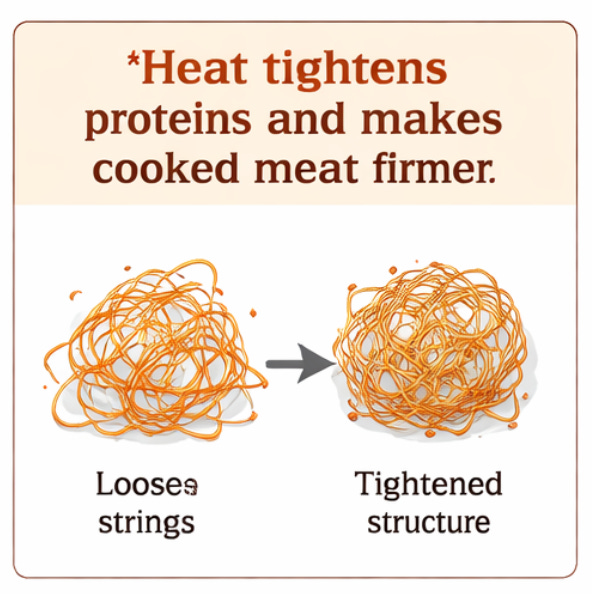
Proteins are long chains that fold into complicated shapes, almost like tangled yarn.
When heat is applied, those shapes unfold and tighten. As they tighten, they form a firmer structure.
That is why raw meat feels soft, but cooked meat becomes firm.
When the surface dries enough, those tightened proteins can also brown and contribute to a crisp outer layer.
A simple way to picture it:
Heat turns loose protein strands into a tighter net.
Protein tightening → structure
This mostly affects meat, fish, and eggs.
Raw proteins are folded into loose shapes, almost like tangled yarn.
When heat is applied, those shapes unfold and tighten.
As they tighten, they form a firmer structure.
That’s why raw chicken feels soft but cooked chicken becomes firm.
If the surface becomes dry enough, those tightened proteins can also brown and form a slightly crisp outer layer.
Starch swelling → softness
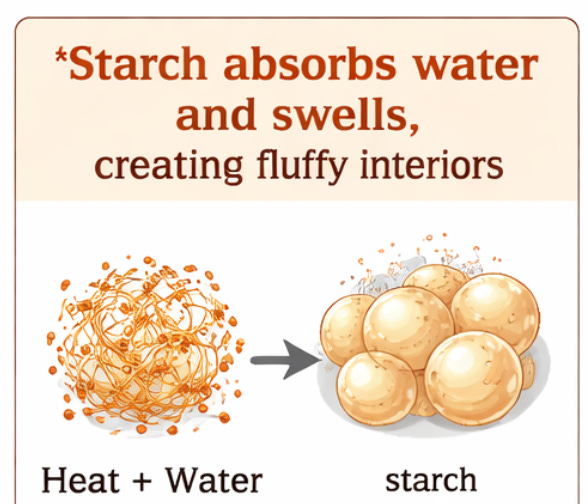
This affects foods like potatoes, rice, flour, and breading. Inside these foods are tiny starch particles. When starch is heated with water, those particles absorb water and swell.
This makes the inside of foods like potatoes soft and fluffy.
Later, when the outside dries during frying or roasting, that same starch layer can harden into a crisp shell.
Simple way to picture it: Tiny dry beads → heat + water → big soft beads
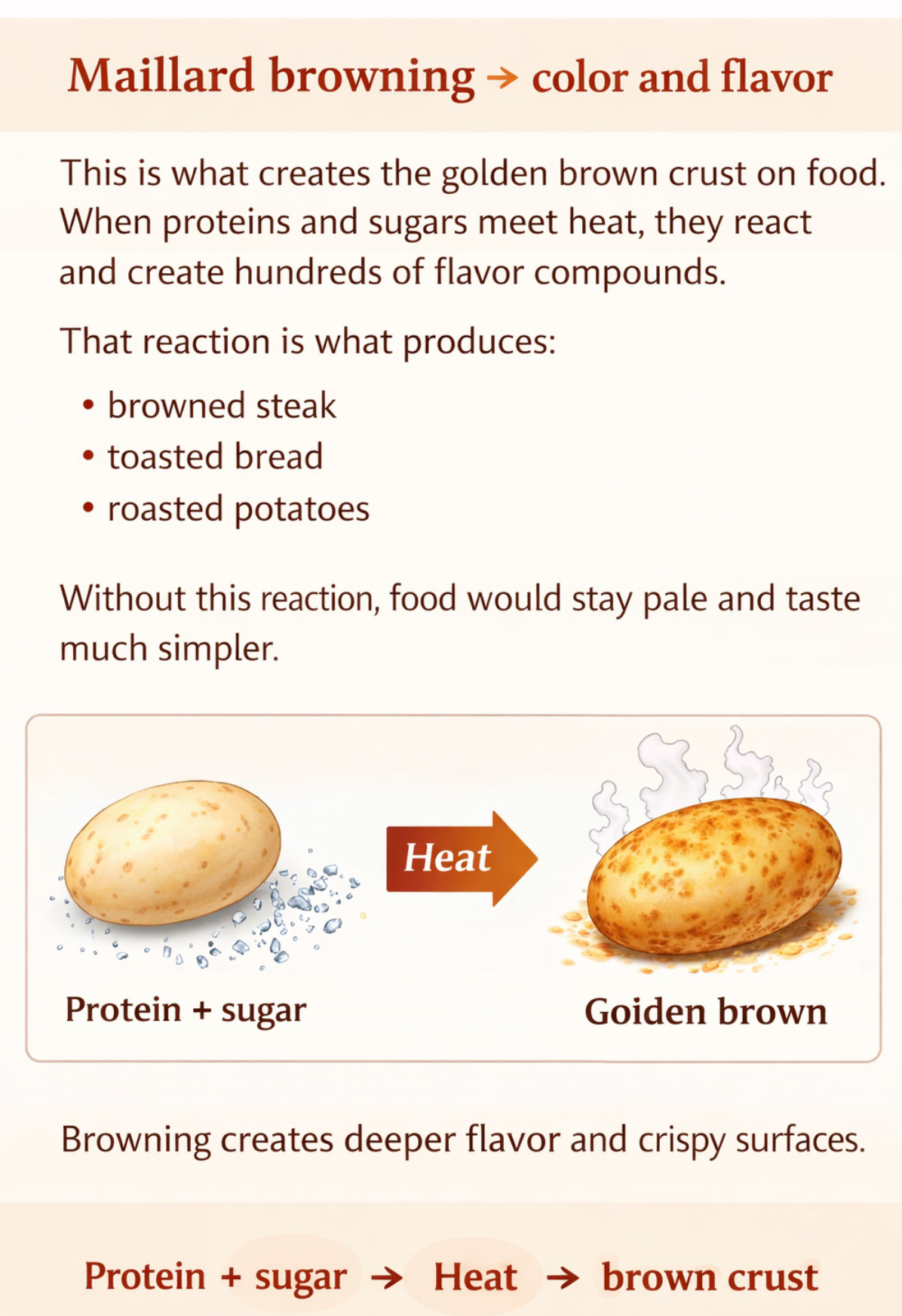
Maillard browning → color and flavor
This is what creates the golden brown crust on food.
What frying actually does
When food goes into hot oil
*NOTE: Oil TYPE (High smoke point, not frequently reused.) and Oil TEMPERATURE (350-360 degrees F) matters :
• heat hits the entire surface at once
• water near the surface turns into steam
• steam escapes outward
That steam helps cook the inside while the outside dries.
Once the surface dries:
• proteins tighten
• starch hardens
• browning begins
That combination creates the crispy shell with a soft interior.
Why some foods crisp easier than others
Foods crisp differently depending on their structure.
Proteins
Chicken skin, steak, fish
Crisp through protein tightening and browning
Starches
Potatoes, breading, batters
Crisp through starch gelatinization and drying
Vegetables
More complicated because they contain cell walls and lots of water
Vegetables like:
• zucchini
• mushrooms
release a lot of moisture while cooking.
That moisture turns into steam, which prevents crisping.
Vegetables like:
• carrots
• broccoli
contain less water and crisp more easily.
Why sweet potato fries are tricky
Have you ever attempted to make homemade sweet potato fries? Did they end up sad and soggy? Sweet potatoes contain more sugar and less starch than regular potatoes.
Sugar softens faster than starch hardens, which is why sweet potato fries often turn floppy.
To get them crispier:
• cut them thinner
• dry them very well
• give them space in the oven or air fryer
• cook at higher heat
• flip once so both sides dry
Even then, they’ll usually be slightly softer than regular fries.
Other ways cooks create crispy surfaces
There are a few common kitchen techniques that help create crisp surfaces.
Oven sear to start → High heat roasting
Drives moisture out quickly so browning can begin. I usually have a preheated oven at a high temp like 425 or 450 F. Then, after 15-25 minutes, drop the temperature (to what depend on what you are cooking and the size of it.) to allow the internal temperature to begin cooking slowly without drying out too quickly.
Pan sear → Oven finish
Creates an initial crust in the pan, then cooks the interior evenly in the oven.
Dry surface coatings
Very light starch coatings help absorb moisture and create a rough surface that browns faster. In future videos, I’ll demonstrate tips and tricks I’ve picked up over the years.
Crispy food is mostly about water, heat, and structure.
Most foods contain a lot of water. As long as that water remains on the surface, the temperature cannot rise much above the boiling point of water (212°F / 100°C). Food can cook at that temperature, but it will not become crisp.
For crispiness to happen:
Moisture must leave the surface
The surface must become hot enough to brown
Once that happens, three important processes shape the texture and flavor of food.
Kitchen Skill takeaway:
Crispiness happens when moisture leaves, structure sets, and browning begins.
Crispy food isn’t just about texture and flavour - it’s about transformation.
Soft becomes firm.
Water becomes steam.
Pale becomes golden.
And all of it happens because of a few simple changes you can learn to recognize.
So the next time you cook, pay attention to those moments:
when moisture escapes, when surfaces dry, when color begins to form.
That’s where the magic is happening.
And once you learn to see it, you’ll never cook the same way again.
Next up…
You just learned that crispiness isn’t about luck - it’s about what happens before and during cooking.
Beans follow the same rule. And once you see it, you won’t cook them the same way again. Next article: Kitchen Skills #4, we’re going to look at whether that blame is actually misplaced, and what generations of cooks figured out long before the science caught up.
In the meantime, your support is needed more than ever.
As science and public health are under attack, research institutions remain gatekeepers of knowledge, I am still here - still translating knowledge and science for the benefit of health for all who seek it.
Please consider becoming a paid subscriber. Monthly or Yearly subscriber - it’s a worthy case.
Subscribing helps keep science accessible, usable, and in the hands of people who need it.
Here’s to your happiness, good health, and being well-fed,
Dr. Sunshine Best | ChefDocShine
Applying lessons from lived experience while translating the science behind everyday cooking so anyone can understand why it works.