


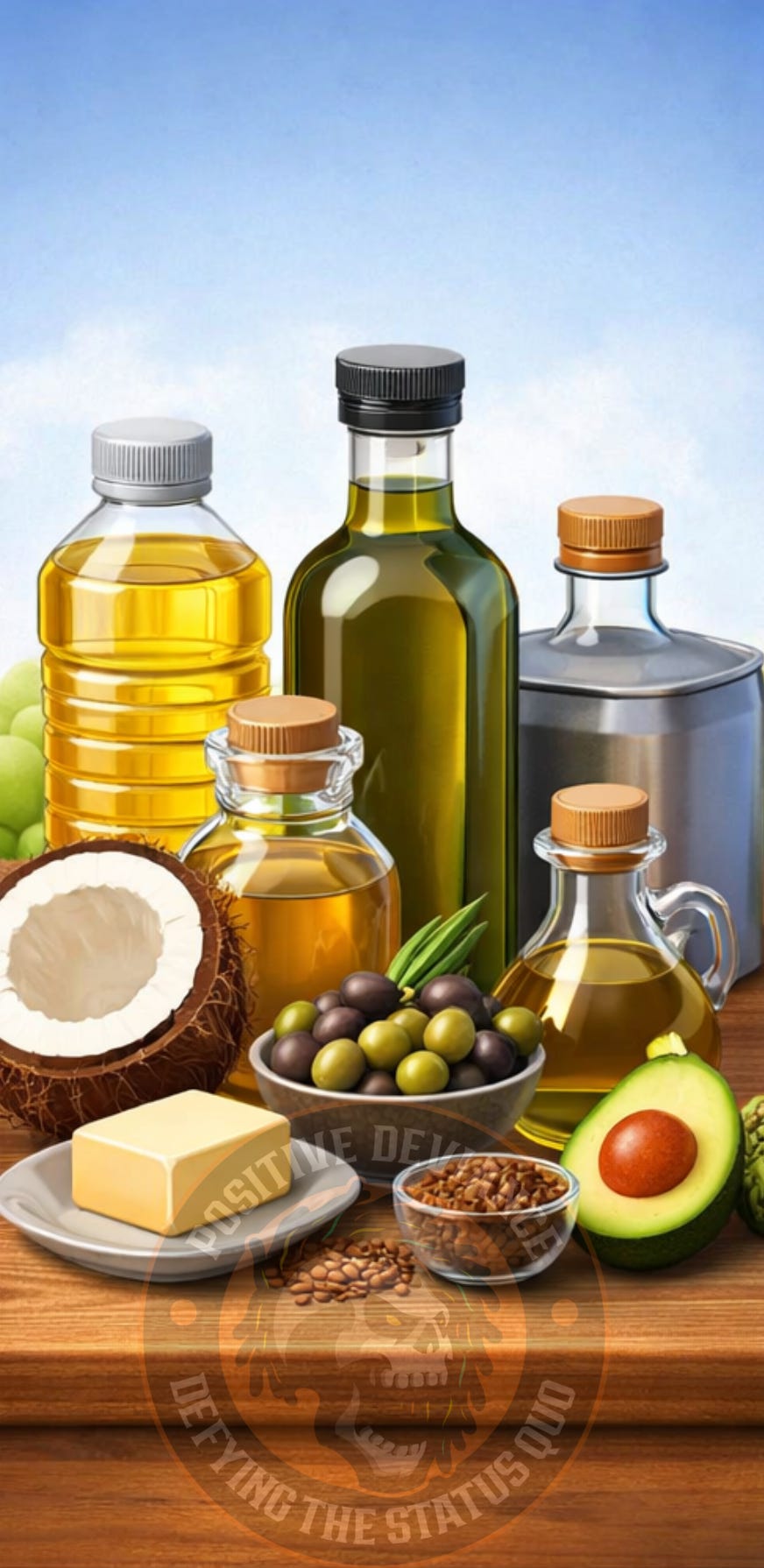
Most people choose cooking oil based on two things:
Flavor
or
Price.
But oils are not just ingredients.
They are fats that change when they get hot.
When oil is heated in a pan, its structure begins to change. Those changes affect:
• flavour
• how the food cooks
• how stable the oil remains
• what ends up in the air of your kitchen
• and what enters your body through the food you eat
Understanding what happens to oil when it gets hot helps cooks make better decisions every day.
What Heat Does to Oil
Cooking oils are made of fat molecules.
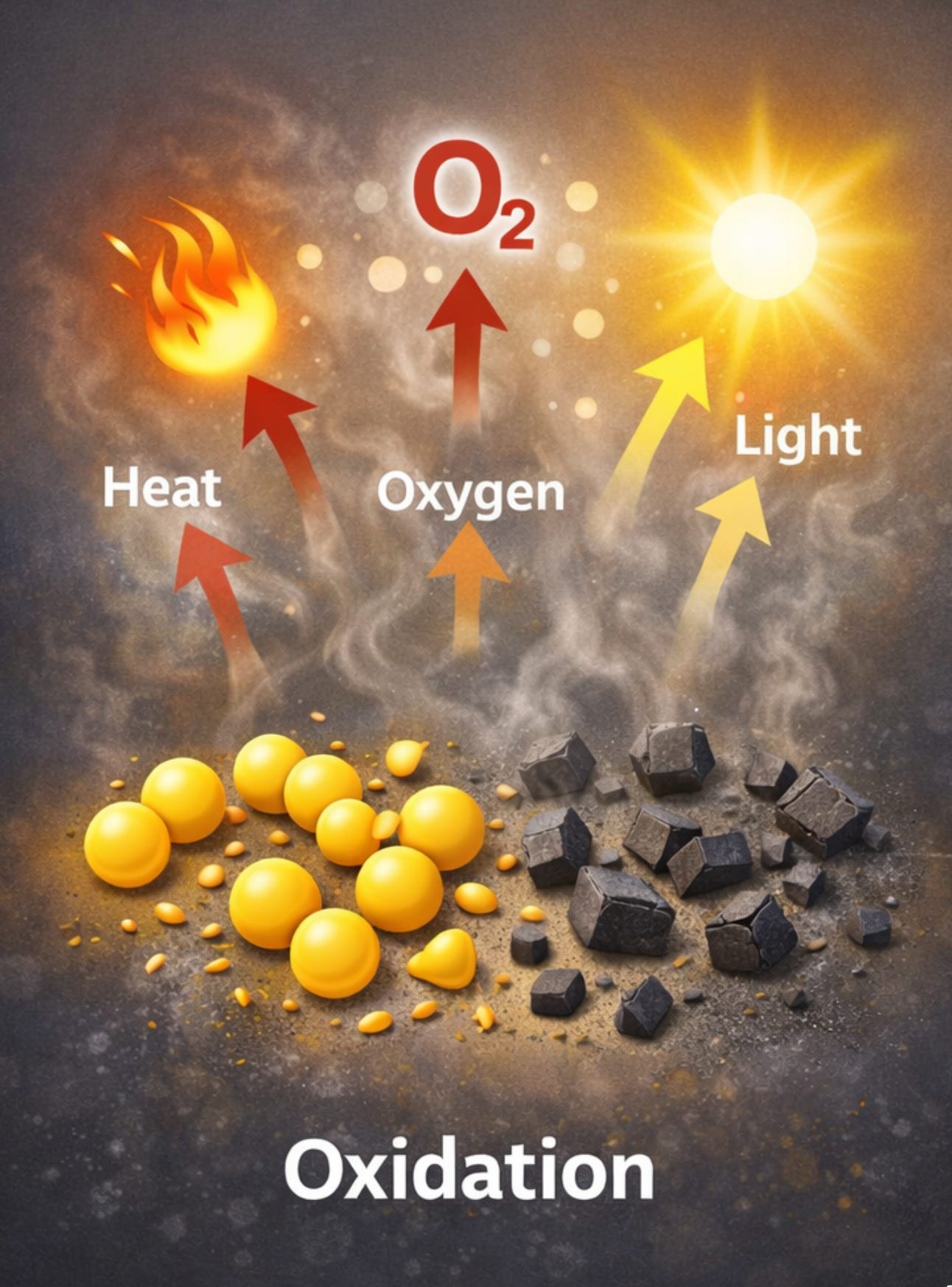
When these fats are exposed to heat, oxygen, and light, they slowly begin to break down. This process is called oxidation. (oxidation simply means oxygen reacting with fat molecules and changing them)
When oils oxidize, several things can happen:
• the flavor becomes bitter or rancid
• smoke begins forming in the pan
• the oil loses some of its natural nutrients
• new compounds form as the fat molecules break apart
The hotter the oil gets, the faster this process happens.
Some of these breakdown products stay in the food. Others can become part of the cooking fumes in the air.
In restaurant kitchens where oil is heated for many hours, scientists have studied cooking fumes and found that some of these compounds can irritate the airways when ventilation is poor.
In home kitchens the exposure is usually much smaller, but the same chemistry still happens in the pan.
That’s why how we heat oil, how long we heat it, and how often we reuse it matters.
Not All Fats Handle Heat the Same Way
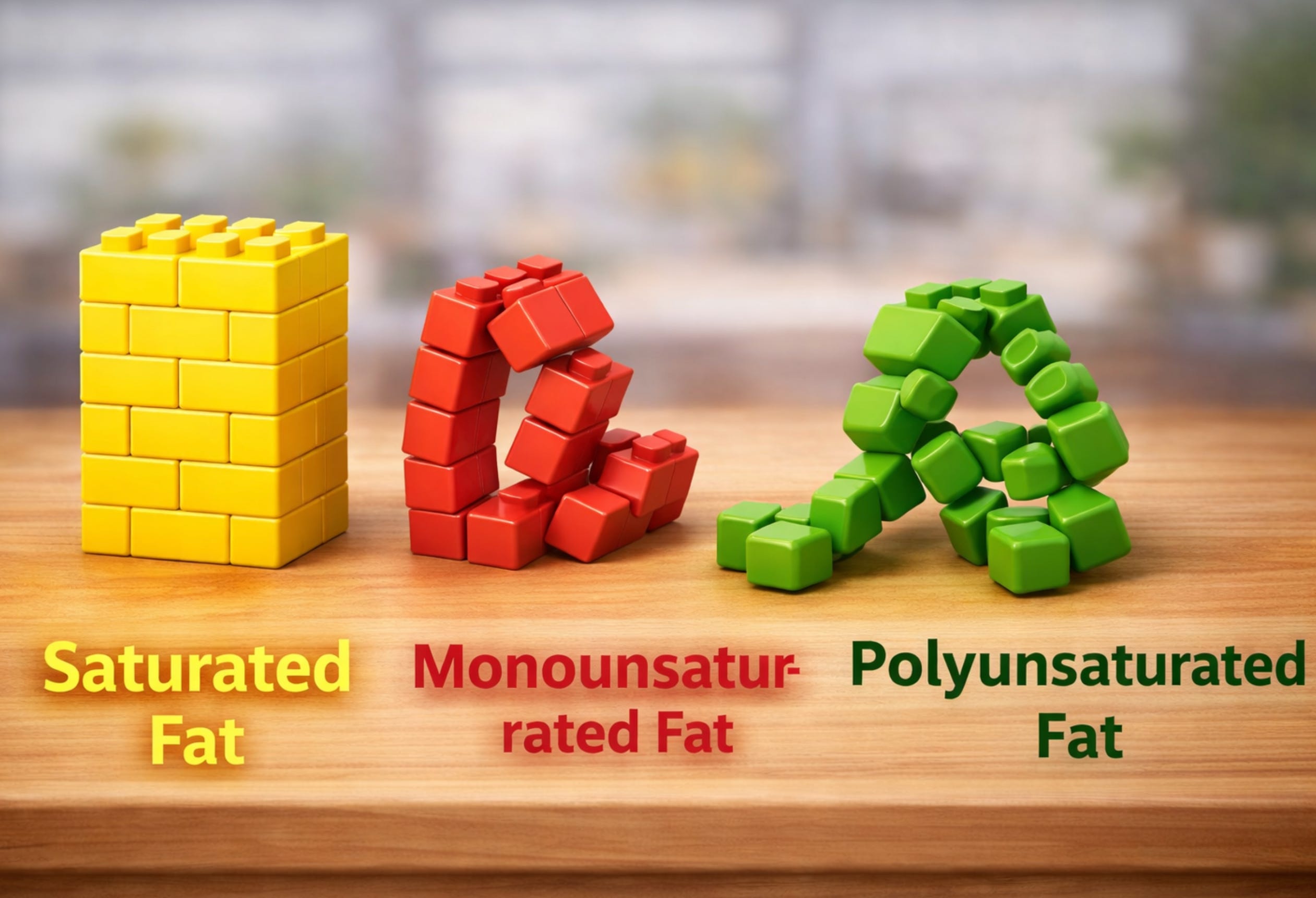
The stability of an oil depends on the type of fat it contains. In simple terms:
• Saturated fats tolerate heat well
• Monounsaturated fats are fairly stable
• Polyunsaturated fats break down more easily when heated
This is why different oils behave differently in the kitchen.
Some tolerate heat better than others.
Why Different Cooking Oils Behave Differently
Not all cooking fats act the same in a pan, on your tongue, or in your body.
Some stay solid at room temperature.
Some pour easily.
Some taste rich and creamy. Others feel lighter.
That difference comes from the shape of the fat molecules that make up the oil.
Think of fats like different kinds of building pieces.
Some are packed tightly together and stay firm.
Some have one bend and move more easily.
Some have several bends and are much more fragile.
Those differences affect:
• how well the fat handles heat
• how it tastes and feels in food
• and how the body processes it
Saturated Fats
(fats that are tightly packed and often solid)
Saturated fats have chains that are mostly straight and tightly packed together.
Because they have fewer weak spots, they usually handle heat well.
Examples include:
• butter
• coconut oil
• ghee
• lard or tallow
What they do in cooking
These fats create:
• rich flavor
• creamy mouthfeel
• crisp edges when frying or roasting
This is why butter makes pastries tender and why animal fats can produce deep flavor when cooking meat or vegetables. And why in so many cultures, after cooking a meat, that fat is preserved for preparation to be used in dishes later.
What they do in the body
Your body can use saturated fat for:
• energy
• building cell membranes
• making hormones
• absorbing certain vitamins
But because these fats are rich and dense, eating very large amounts regularly may raise LDL cholesterol, often called “bad cholesterol.” In school, I taught myself to remember the L is for Lethal - in order to remember the difference :)
Tropical Saturated Fats
Not all saturated fats are identical.
For example, coconut oil contains shorter fat chains that the body can use for energy relatively quickly.
These fats can raise both:
• LDL (“bad”) cholesterol
• HDL (“good”) cholesterol (From my school notes to help me remember, H = Healthy)
This is one reason scientists still debate how tropical oils fit into long-term diet patterns.
The main takeaway is simple:
saturated fats are not all the same.
Monounsaturated Fats
(fats with one bend in their structure)
Monounsaturated fats contain one bend in the fat chain.
This makes them a little more flexible than saturated fats but still fairly stable.
Examples include:
• olive oil
• avocado oil
• peanut oil
What they do in cooking
These oils work well for:
• sautéing
• roasting
• dressings
• finishing foods
They carry flavor beautifully without feeling overly heavy.
What they do in the body
These fats are often associated with heart-friendly eating patterns, such as the Mediterranean diet. They can help maintain healthy cholesterol balance when used instead of more processed fats.
Polyunsaturated Fats
(fats with several bends in the chain)
Polyunsaturated fats contain several weak spots in their structure.
Because of this, they tend to change more quickly when exposed to heat, air, or light.
Examples include oils made from:
• sunflower
• corn
• soybean
• flax
• walnut
What they do in cooking
These oils can work well for:
• dressings
• sauces
• lower-heat cooking
But they are more delicate and can break down faster during intense heat.
What they do in the body
Some polyunsaturated fats are essential, meaning the body needs them but cannot make them itself.
They help support:
• brain function
• cell structure
• growth and repair
So again, these fats are not bad — they simply need to be handled carefully when cooking.
What “Oxidation” Means
When oils are exposed to heat, air, and light, they slowly begin to change.
This process is called oxidation.
(oxidation simply means oxygen in the air reacting with the fat and damaging it)
When oils oxidize they can:
• lose their fresh flavor
• smell stale or bitter
• lose some nutritional value
If this continues long enough, the oil becomes rancid, meaning it smells and tastes spoiled.
Heat speeds this process up.
Smoke Point Isn’t the Whole Story
You may hear cooks talk about an oil’s smoke point.
Smoke point is the temperature where oil begins to visibly smoke. This is not only bad for your dish, may be harmful to your health, AND it could burst into flames.
But smoke point doesn’t tell the entire story about how well an oil handles heat.
Some refined oils have high smoke points but still break down fairly quickly because of the types of fats they contain.
That’s why choosing an oil depends on both:
• the type of fat
• and how hot you plan to cook
Butter vs Margarine
Butter contains a mix of fats plus small amounts of water and milk solids (including sugars, which is why it browns). Those milk solids give butter its wonderful flavor, but they cancan burn quickly at high heat.
They are also why why many cooks (and chefs, like me!) combine butter with another oil when sautéing and it flavour is beneficial.
Margarine is made from vegetable oils.
Depending on the formulation, those oils may break down faster when heated.
Older margarines once contained trans fats, which were later linked to heart disease. Many modern margarines have been reformulated, but their stability still depends on the oils used to make them.
Understanding the type of fat helps determine how well it handles heat.
Why Olive Oil Became So Famous
Olive oil became popular partly through cooking shows and attention to Mediterranean diets.
Extra virgin olive oil contains plant compounds that contribute to both flavor and health benefits.But these compounds are delicate. Very high heat can damage them. This doesn’t mean its unhealthy - but the quality/integrity of the oil changes.
That’s why olive oil works best for:
• moderate heat cooking
• sautéing
• finishing dishes
Using expensive extra virgin olive oil for very high-heat frying often destroys the qualities people are paying for.
Oil, Plastic Bottles, and Storage
Another factor people rarely think about is how oils are stored.
Many cooking oils are sold in plastic bottles.
Oils are very good at dissolving other fat-soluble substances.
Because of this, small amounts of compounds from packaging materials can sometimes migrate into oil during storage. This is also true for other food related products, like those super affordable rotisserie chickens at grocery stores and big box retailers.
Heat, light, and long storage times can increase this process.
For this reason, many higher-quality oils are packaged in dark glass bottles, which protect the oil from both light and packaging interactions.
A Simple Way to Think About It
Imagine three ropes.
One rope is smooth and strong.
Another has one weak spot.
A third has several weak spots.
When heat and air pull on those ropes, the one with the most weak spots breaks first.
Cooking fats behave the same way.
Some are sturdier.
Some are more delicate.
Neither is automatically good or bad.
They simply need to be used in the right way.
Why This Information Rarely Reaches the Public
Spend a few minutes on social media and you’ll see endless posts warning about “hidden toxins” in household products:
• dish soaps
• air fresheners
• cleaning products
• cosmetics
Some of those concerns are valid.But something interesting happens in the conversation.
Very little attention is given to what happens when we heat the foods we cook every day.
Many cooking oils are classified as GRAS — Generally Recognized As Safe.
That classification usually refers to normal use of the ingredient itself.
What receives much less attention is how oils behave when they are repeatedly overheated or broken down during cooking.
Scientists have studied cooking oil degradation and cooking fumes for decades, especially in restaurant kitchens. Yet very little of that information is translated into practical guidance for everyday home cooks.
The Kitchen Skill
Instead of using the same oil for everything, match the oil to the type of cooking you’re doing.
For example:
Higher-heat cooking
Choose oils that tolerate heat well.
Examples include:
• avocado oil
• peanut oil
• refined olive oil
• refined coconut oil
Moderate-heat cooking
These oils work well for sautéing.
Examples include:
• olive oil
• butter combined with oil
Finishing oils
Some oils are best added after cooking.
Examples include:
• extra virgin olive oil
• sesame oil (especially dark sesame oil)
• walnut oil
• flaxseed oil
These oils bring wonderful flavor but break down easily when exposed to high heat.
Practical Cooking Habits
A few small habits make a big difference.
1. Avoid overheating oil
If oil is smoking heavily, it has already begun breaking down. (Bad for taste, no great for health, and worst of all - it’s a fire hazard.)
2. Store oils away from heat and light
Light and warmth speed up oxidation.
3. Don’t reuse frying oil endlessly
Repeated heating slowly degrades oils. Not great for health.
4. Save delicate oils for flavour
Use them after cooking (finishing oil) or a salad dressing, rather than for high heat.
Why This Skill Matters
Cooking oils influence more than flavour.
They affect how food cooks, how stable fats remain, and even the air quality in the kitchen.
Understanding how heat changes oil helps cooks make choices that improve both cooking results and long-term health.
And like many things in cooking, the goal isn’t fear.
It’s simply knowing what’s happening in the pan AND WHY.
What Comes Next
One of the most satisfying textures in cooking is crispy food.
But crispiness isn’t magic. It’s chemistry.
In the next post we’ll look at why foods become crispy - and how to make that happen on purpose.
Here’s to your happiness, good health, and being well-fed,
Dr. Sunshine Best aka ChefDocShine
Applying lessons from lived experience while translating the science behind everyday cooking so anyone can understand why it works.