

Kitchen Skill #1
Why Salt Changes Food and How to Use It for the Greatest Effect

Most people think salt simply makes food taste better.
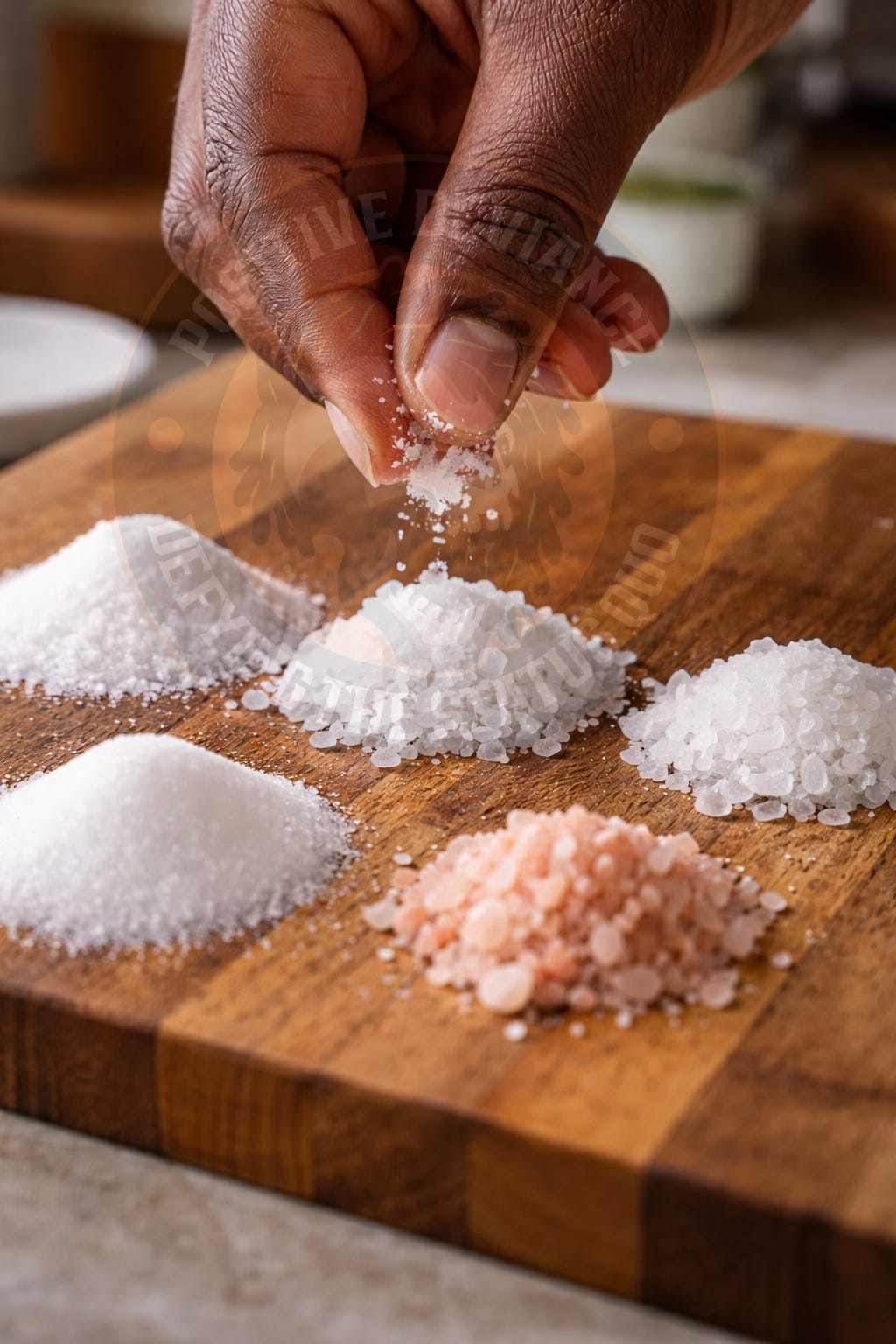
That’s true ~ but it’s not the whole story.
Salt doesn’t just sit on the surface of food. It actually changes the structure of food itself. Understanding what salt does - and when to use it - can dramatically improve how food tastes and cooks.
This is one of the simplest kitchen skills, and one of the most powerful, which is why I’m using it first.
Why Salt is NOT the enemy
Salt has developed a bad reputation in many nutrition conversations.
But salt itself is not the problem.
For most people, salt is necessary for the body to function properly.
What often causes concern is the very high levels of sodium in heavily processed foods, not the small amounts used in home cooking.
Salt is made of sodium and chloride - two minerals your body actually needs.
Your body uses sodium to help:
* regulate fluid balance (keeping the right amount of water inside and outside cells)
* transmit nerve signals (how nerves communicate with muscles and organs)
* support muscle contraction (including the muscles that control breathing and the heartbeat)
Without enough sodium, the body cannot properly maintain these systems.
This is why completely eliminating salt is neither realistic nor healthy for most people. The goal is balance, not fear.
What Salt Actually Does
Salt affects food in three major ways:"
* Osmosis (movement of water through cells toward salt)
* Protein modification (changing how proteins hold water and structure)
* Cell structure changes (weakening plant cell walls, which affects texture)
Each of these changes how food tastes, cooks, and feels in the mouth.
Osmosis
(water moving through cells toward salt)
When salt is added to food, it pulls water out of the cells.
That water dissolves the salt and creates a light brine. Over time, this salty liquid can move back into the food.
This is why properly salted food tastes seasoned throughout, not just on the surface.
Protein Modification (changing how proteins hold water)
In meat, salt interacts with muscle proteins - especially one called myosin.
Salt loosens how these proteins are bundled together, which allows them to hold onto more water during cooking.
This is why techniques like brining can help tenderize meats that easily dry out, such as turkey or chicken breast.
When the proteins retain more moisture, the result is meat that cooks up juicier and more tender.
Cell Structure Changes (weakening plant cell walls and changing texture)
Vegetables have cell walls that give them structure.
Salt interacts with compounds in those walls and slowly weakens them. As a result, vegetables release water and soften.
You can see this clearly when salting foods like:
* cucumbers
* cabbage
* mushrooms
* eggplant
How Salt Helps Us Taste Flavor
Salt does something else important - it helps unlock flavour.
Salt activates and enhances taste receptors on the tongue.
This allows the brain to perceive flavors more clearly.
When the right amount of salt is used, it doesn’t make food taste “salty.”
Instead, it helps the natural flavors of the food become easier to detect.
If a dish tastes salty,
that usually means the salt has gone beyond this balancing point and started to dominate the flavour. (Meaning you’ve added too much.)
Used properly, salt doesn’t hide flavour - it reveals it.
A Quick Note About Salt Grain Size
Not all salt behaves the same way.
The size of the salt crystals affects how quickly it dissolves and how evenly it spreads through food.
For everyday cooking, it helps to understand three common types:
Fine salt
(small grains that dissolve quickly)
This works well for things like pasta water, soups, sauces, and baking because it dissolves quickly and distributes evenly.
Kosher or coarse salt
(larger crystals that are easier to control with your fingers)
This is often preferred for seasoning during cooking because it spreads more evenly and is easier to measure by feel.
Flaked finishing salt
(thin, delicate crystals designed to stay on the surface)
Flaked salt is usually used at the end of cooking.
It adds a light crunch and bursts of flavor on top of food.
Because the flakes are large and dissolve slowly, it’s not ideal for seasoning pasta water or mixing into dishes while cooking.
Using the right salt for the right moment makes seasoning much easier to control.
Three Quick Salt Habits That Instantly Improve Cooking
Understanding what salt does is useful.
But a few simple habits can improve cooking right away.
1. Salt early when possible
Salting ingredients earlier gives salt time to interact with the structure of the food, improving flavor and texture. Salting meat before cooking helps proteins hold moisture and improves flavor penetration.
2. Taste as you go
Salt works best when added gradually. Tasting while cooking helps you stop before the flavor becomes overly salty. Instead of adding a large amount at the end, add small amounts throughout cooking so seasoning distributes evenly.
3. Use finishing salt intentionally
A small pinch of finishing salt at the end can brighten flavors and add texture, but it should enhance the dish - not overpower it.
These small habits make seasoning more precise and help food taste balanced rather than simply salty.
Bonus Point: When Salt Timing Affects Texture
Your instinct about timing is correct, but the bean example needs a small clarification.
The old advice said “never salt beans until the end.”
Modern testing has shown this is mostly a myth. In many cases salting beans early actually helps them cook more evenly and keeps the skins intact.
Where timing does matter a lot is skin texture and surface moisture.
When the Timing of Salt Matters
Salt doesn’t only change flavor—it also affects moisture on the surface of food.
Because salt pulls water toward it, adding salt at the wrong time can change how food browns or how the skin behaves.
For example:
• Chicken or turkey skin
If you salt poultry and cook it immediately, the salt pulls moisture to the surface and the skin may steam instead of crisping.
If you salt poultry 30–60 minutes before cooking (or even overnight in the refrigerator), the moisture has time to redistribute and the skin can crisp much better.
• Mushrooms and watery vegetables
Salting too early in a crowded pan can release water faster than it evaporates, which causes steaming instead of browning.
• Beans and legumes
Older cooking advice suggested salting beans only at the end. More recent testing shows that salting the cooking water can actually help beans cook more evenly and keep their skins intact. However, keeping skin intact may not be a part of the recipe - so keep that in mind.
As with many kitchen skills, timing is the real secret.
In Closing ~
Salt is one of the simplest ingredients in the kitchen.
Yet something as small as a grain of salt can change how food cooks, how it tastes, and how it feels.
Understanding what salt actually does turns seasoning from guesswork into a skill. And that’s the real goal of kitchen literacy.
Not memorizing recipes.
But learning the small mechanisms that make food behave the way it does.
Once you understand those patterns, cooking becomes easier, more flexible, and far less intimidating.
Next in this series, we’ll look at another place where everyday food advice often gets confused:
why some foods make people feel sick ~ and why those reactions are not always the same thing.
Kitchen Skills & Food Science Series
New posts each Wednesday exploring everyday cooking skills and the science behind why they work.
Subscribe if you’d like the next lesson delivered directly to your inbox.
Until next time ~
Here’s to your happiness, good health, and being well-fed,
Dr. Sunshine Best | ChefDocShine
Applying lessons from lived experience while translating the science behind everyday cooking so anyone can understand why it works.
Helpful information. Thank you.