

Bathrooms as Biohazards
The Positive Deviant Series: Everyday Hazards, Accessible Knowledge for Informed Decision Making

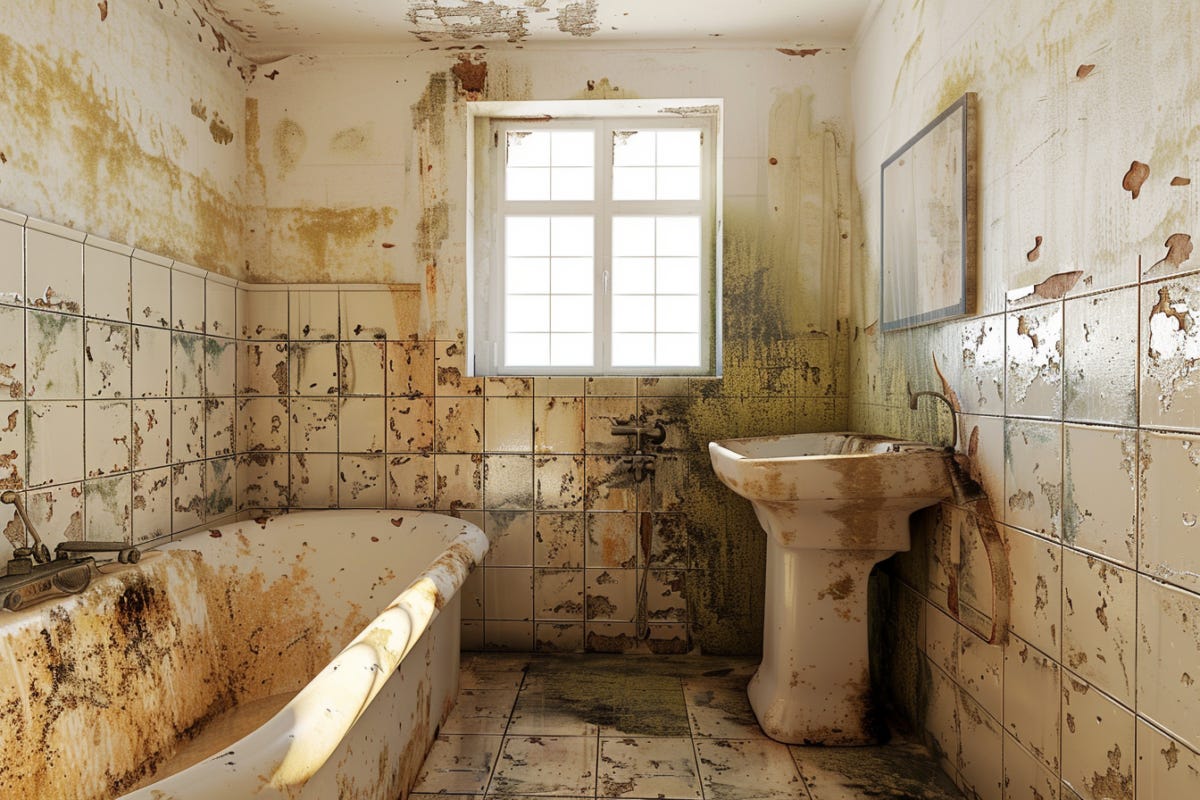
image: supenviro.com (2025)
The Danger: You, the Shower, and an Uninvited Colony
Step into your shower and you’re not alone. You’re standing in a damp carnival of microbial freeloaders who didn’t bother to buy tickets. The warmth, the steam, the skin cells you shed daily? That’s not hygiene — it’s dinner service.
Athlete’s foot fungi (Trichophyton rubrum and its itchy cousins) cling to tile grout. Biofilms — those slimy microbial cities that laugh in the face of bleach — nestle into soap scum and drain slime. Bacteria like staph (Staphylococcus aureus) and MRSA can survive on your towels and bath mats. Yeast from your underwear? Yes, that too can hop over into the bathroom environment, tucked into damp fibers or biofilms.
And if you think this is just a problem for locker rooms, think again. Your private bathroom, your softest towel, even your favorite slippers — they’re all potential fomites, the technical term for inanimate objects that carry infectious agents.
The truth is ugly: your bathroom is not the sanitized sanctuary you imagine.
It’s a microbiological Airbnb with flexible check-out policies.
Why They Thrive in Bathrooms
Bathrooms are an ecosystem built for microbial survival:
Moisture: The constant damp provides the perfect humidity.
Warmth: Average bathroom temperatures are microbial incubators.
Food sources: Skin cells, hair, and soap residue serve as compost.
Surfaces: Porous mats, textured grout, and shoes offer footholds.
Dermatophytes (the fungi behind athlete’s foot, ringworm, nail infections) produce hardy spores that cling to surfaces for weeks. Shoes? They’re basically fungal condos — dark, sweaty, insulated — where spores can last for months.
Candida, the yeast behind yeast infections, is less durable than dermatophytes in the open air. But give it a moist environment or a biofilm in a drain, and it can persist for weeks.
And biofilms are the true supervillains here: a sticky extracellular matrix that protects bacteria and fungi from disinfectants, antibiotics, and antifungals. That soap scum on your tub isn’t just grime — it’s microbial body armor.
The Equity Layer Nobody Mentions
Health advice often assumes you own your environment.
Wash your towels in hot water! Buy a new mattress! Run the exhaust fan! But what if you rent a place with poor ventilation? A lived experience example: I lived in a 10 ft x 18 ft poorly lit and more poorly ventilated garden shed in an effort to live within my means for seven years during my final year of my last undergrad, Masters and Doctorate (Note to NEW readers: see previous articles detailing my history coming from Foster Care and the inequitable struggles that follow us well into our adult years). What if you live in a dorm, a shelter, or an overcrowded household where towels are shared and showers are culturally communal?
Environmental health isn’t just about invisible hazards.
It’s about who bears the brunt when infrastructure is inadequate, when resources are scarce, knowledge is not widely shared, and when advice ignores real living conditions. Fungus in grout is annoying in a suburban home. In a communal bathroom with no ventilation and no regular cleaning, it’s a chronic public health hazard.
Remediation: Fighting Back Against Bathroom Biomes
So how do you reclaim your bathroom without burning it down? You fight smarter, not harder.
1. Personal Hygiene Hacks
Shower shoes:
Especially in gyms, shared bathrooms, maybe even AirBnBs?
Your bare feet are basically fungal Velcro.Drying matters:
Fungi love dampness. Dry feet thoroughly, including between toes.
Rotate shoes so they actually dry before you wear them again.Towels & bedding:
Wash in hot water and use a dryer. Air-drying may save energy, but it also leaves spores behind.
2. Household Strategies
Biofilm-busters:
Vinegar and hydrogen peroxide are better at disrupting biofilms than bleach. Alternate them for best effect. (See previous article to learn more about why.)Ventilation:
Run the fan or crack the window. A dry bathroom is a hostile environment for fungi. In some parts of the world, a dehumidifier might be a worthwhile investment, especially in small spaces.Target high-risk spots:
Bath mats, grout, and shower curtains are prime microbial real estate.
Wash mats weekly, replace curtains when they start looking “alive.”
3. Ethnobotanical Antifungals
Traditional remedies aren’t just folklore — many are backed by lab studies:
Neem oil (Azadirachta indica):
Long used in South Asia for its antifungal and antibacterial properties.Tea tree oil (Melaleuca alternifolia):
Demonstrates broad-spectrum antifungal activity.Thyme and oregano oils:
Rich in terpenes like thymol and carvacrol that disrupt fungal membranes.
And don’t underestimate sunshine (hard wink): traditional practices of sun-drying mats, fabrics, and shoes weren’t just quaint. UV light is one of the most effective natural antifungals we have.
The Takeaway
Your bathroom isn’t evil. It’s just opportunistic. Microbes will always move in when conditions are right. The challenge is drawing the line: drying, cleaning smarter, reclaiming space from biofilms, and remembering that solutions don’t have to be high-tech or expensive.
Sunlight, vinegar, neem, and a little strategic ventilation can do what bleach and despair can’t.
Because here’s the dirty truth: the bathroom doesn’t need to be sterile. It just needs to stop being a playground for pathogens. And that, thankfully, is something you can control.
Closing Punch
Your shower is not out to get you. It’s just a stubborn roommate with poor boundaries. Set those boundaries. Dry it out. Let in the sun. And for the love of your feet, don’t walk barefoot on the bath mat you forgot to wash last month.
Next up in this series: Bedroom Biohazards | Sleeping with the Enemy
PLEASE - Don’t forget to support me to do this work!
Signing off for now,
Sunshine,
Your Positive Deviant-in-Residence